

The Monthly Mystery
It's the last week of the month. Your bank balance is lower than you expected — maybe significantly lower. You sit there mentally replaying the past few weeks, trying to account for it.
Rent: yes. Groceries: a few times, sure. But that shouldn't explain all of it.
This is one of the most common financial experiences people have, and it's not unique to any particular income level. You can earn well and still end up puzzled at the end of the month. The issue isn't usually reckless spending — it's that spending is largely invisible until you make it visible.
The Things That Actually Absorb Your Money
Before getting into solutions, it's worth understanding where the gaps usually are. A few categories account for most of the surprise spending.
Subscriptions you forgot about
The average person has somewhere between 10 and 15 recurring subscriptions. They can name about half of them at any given moment. The rest quietly renew monthly — streaming services, cloud storage, apps you used twice, a gym membership from six months ago.
Each one is €5–15. Together they can quietly consume €80–150 a month without ever triggering a single spending decision.
Small daily purchases
A coffee every working day: around €70 a month. Two food deliveries a week: €120. A snack at work each afternoon: €50.
None of these feel like significant decisions in the moment — that's precisely why they add up. You're not consciously choosing to spend €240 a month on those three things. But that's what they add up to.
Fees layered on top of purchases
This is a newer category but a growing one. When you order food delivery, the meal is only part of the cost: delivery fee, service fee, small order surcharge, tip. A €12 meal often becomes a €22 transaction. Same story with ride-sharing surge prices, same-day delivery premiums, and currency conversion fees when traveling.
These often don't get their own line in bank statements — they blend into the transaction amount. Easy to miss.
Irregular but predictable costs
Annual subscriptions that hit once a year. Seasonal expenses — new clothes as the weather changes, holiday gifts, car registration. These aren't monthly, so they don't figure into your mental model of "what I normally spend." But averaged out, they can be a significant monthly cost.
Three Ways to Actually Find Out

1. The manual audit (painful once, clarifying forever)
Pull out your last two or three months of bank and credit card statements. Go through every transaction and write down the category next to it. Add it up.
This takes 2–3 hours and is not fun. But if you've never done it, it's usually genuinely surprising. The numbers will be different from what you expected — sometimes by a lot. For many people, doing this once is what finally makes the spending patterns real.
The limitation: this is backwards-looking and one-time. It doesn't help you track going forward.
2. Bank's built-in spending analysis
Most banking apps now include some form of spending breakdown. Transactions get auto-categorized and displayed in charts.
It's better than nothing, but the categorization is often wrong or vague. Cash purchases don't appear. Merchant names are frequently unrecognizable. You get a partial picture, not a complete one.
3. Dedicated expense tracking app
The most complete method: you log expenses as you go, using receipt scanning for most things and quick text for the rest. You build up a real-time record of everything you spent — card, cash, online, international.
After a week or two, patterns become visible. After a month, you have a clear baseline. This is the method that gives you an accurate, complete answer to "where does my money go?"
What People Typically Discover
The first few weeks of honest tracking tend to surface the same discoveries:
Food delivery is more expensive than it seems. Between the service fees and the frequency, it's usually the biggest surprise. Many people find they're spending €150–300 a month on delivery without having thought of it as a significant expense category.
There are subscriptions they don't use. Almost universally, there's at least one subscription that's been renewing for months that the person no longer needs. Usually more than one.
The "occasional" thing isn't occasional. "I only order takeaway sometimes" usually means 2–3 times a week when you actually look at the data. "I rarely shop online" often turns out to be multiple small orders per week.
None of this means you're spending wrong. It just means the picture is now accurate, and you can make decisions based on reality rather than approximation.
What to Do With the Information
You don't have to do anything drastic. Awareness on its own tends to shift behavior naturally — not because you're following rules, but because the information changes the way decisions feel.
If you want to act on what you find, the lowest-effort approach is this:
Cancel unused subscriptions first. This is the only change that costs nothing and requires no ongoing discipline. Do it once, save the money every month.
Notice patterns, don't fight them. If you're spending a lot on food delivery, you don't need to swear it off entirely. You might just choose more deliberately — one fewer order a week, or cooking on the nights when you'd otherwise be most likely to order.
Set one soft target, not ten hard rules. Trying to restrict five categories at once rarely works. Picking one thing to be more conscious about has a much better track record.
Tracking Doesn't Have to Be a Project
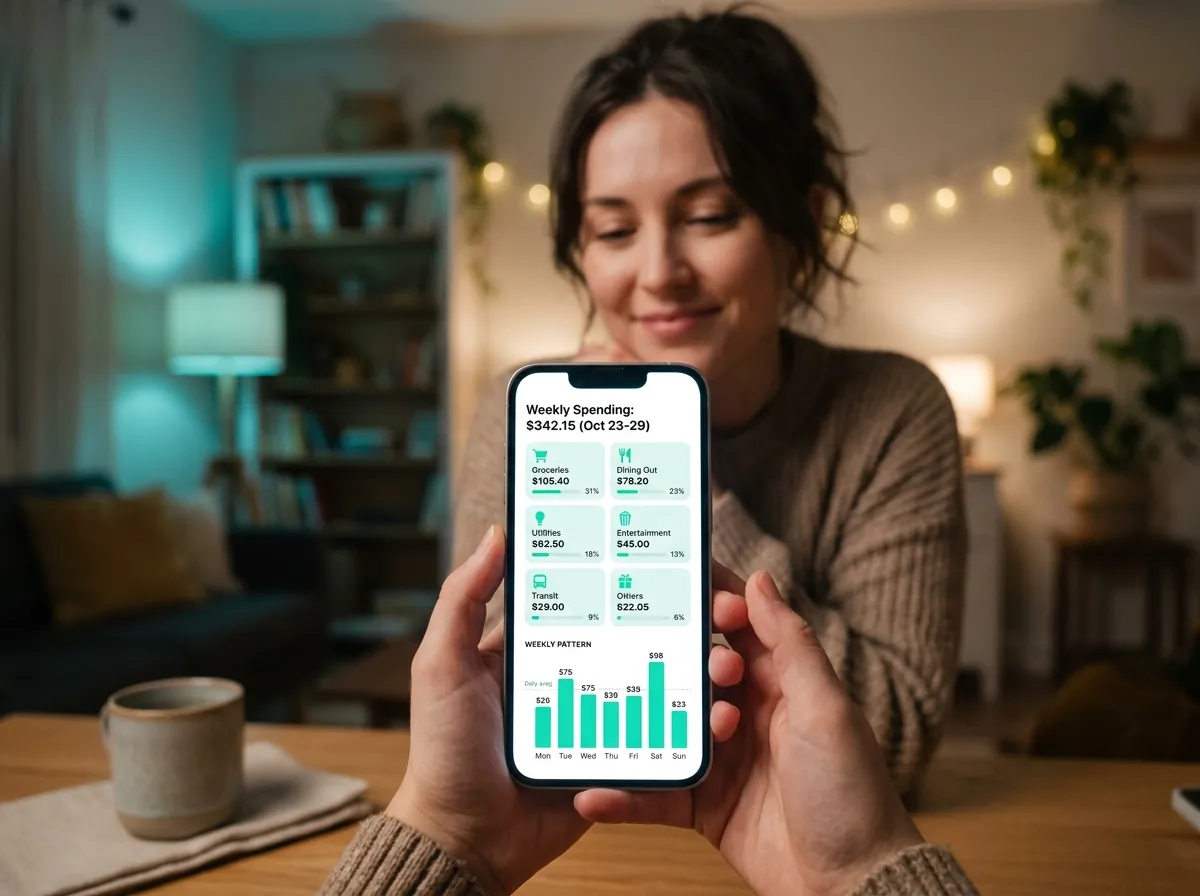
The thing that puts most people off is imagining that expense tracking means hours of spreadsheet work every month. It doesn't have to be.
Scan a receipt when you get it. Type a quick note when you pay cash. Glance at the weekly summary. That's the whole system. For most people, ten minutes a week is enough to maintain a clear picture of where their money goes.
The hard part isn't the tracking itself — it's just starting.
If you want a simple tool to get started, TrackCent handles the receipt scanning and categorization automatically. No bank connection, no setup, no budget required. It's available on the App Store — free to start.


